10 year acc aha risk calculator
Learn more about the American Heart Associations efforts to reduce death caused by heart disease and stroke. ACCAHA Guidelines do not specify antihypertensive drug therapy for SBP.
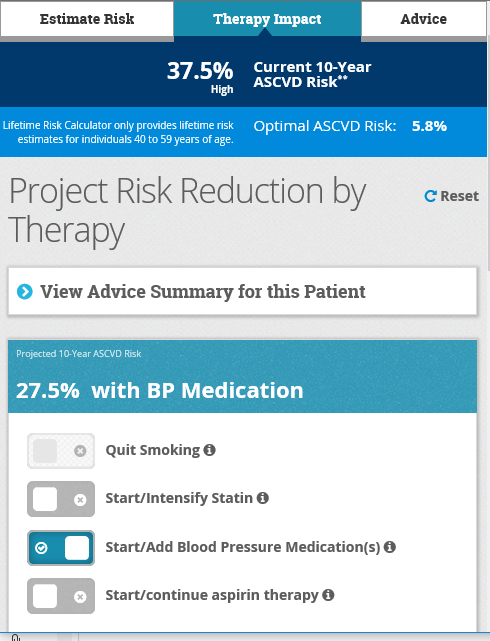
Ascvd Risk Estimator
Use of the risk calculator and ACCAHA guidelines remains controversial and is evolving as more data become available.
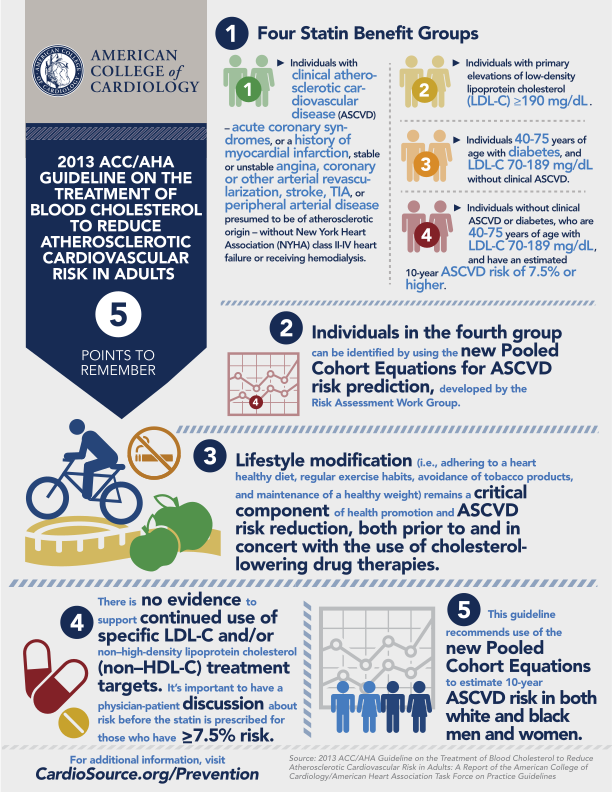
. Individuals not receiving cholesterol-lowering drug therapy should have their estimated 10-year ASCVD risk calculated initially and then every 4 to 6 years in individuals aged 40 to 75 years without clinical Atherosclerotic Cardiovascular Disease or. For the same other inputs this calculator estimates higher cardiovascular risk for African American patients. Guidelines do not typically recommend aspirin therapy for patients with 10-year risk.
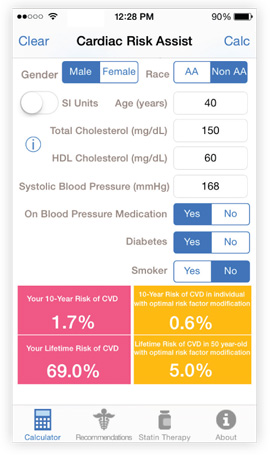
Also learn about cardiovascular conditions ECC and CPR donating heart disease information for healthcare professionals caregivers and. This Risk Estimator enables health care providers and patients to estimate 10-year and lifetime. The ASCVD Risk Assessment Calculator gives both the 10-year and lifetime risk of developing atherosclerotic heart disease which includes heart attack and stroke.
Simultaneously the risk of stroke doubles every decade after age 55. Age is the most important risk factor in developing cardiovascular or heart diseases with approximately a tripling of risk with each decade of life. Guidelines do not recommend statin therapy for patients with 10-year ASCVD risk.
2 The new guidelines have updated patient risk assessment and treatment. AHAACCHRS guidelines for atrial fibrillation. 10 mg PO qDay in hospital and after hospital discharge for 31-39 days.
It is estimated that 82 percent of people who die of coronary heart disease are 65 and older. Some say that the current risk calculator can overestimate risk. Risk is not shown for therapys that are not recommended.
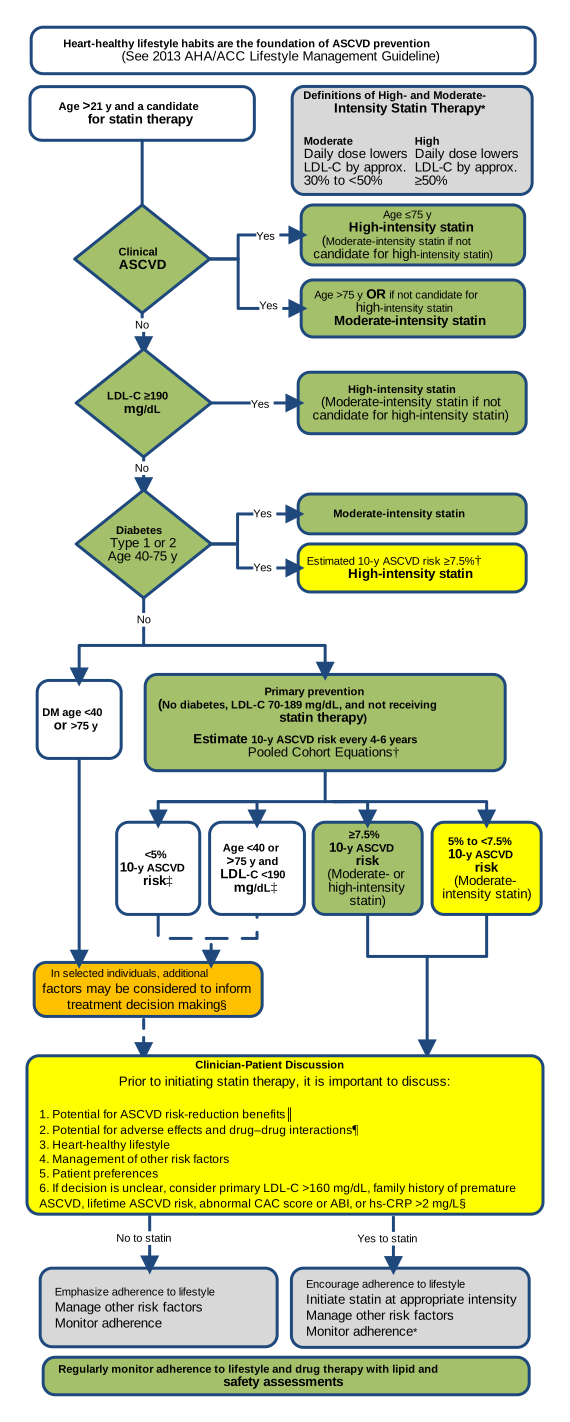
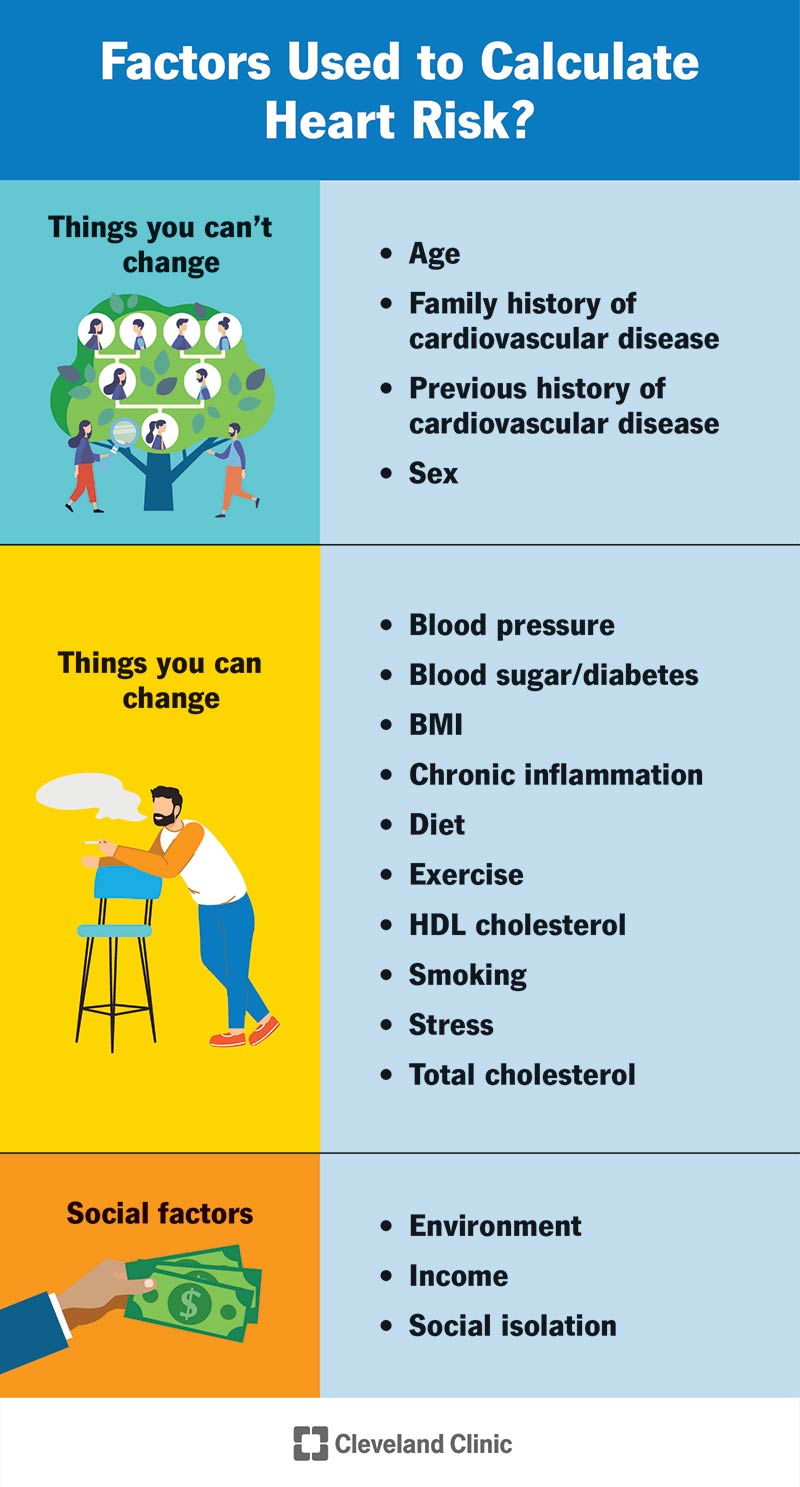
The risk score can help you make lifestyle changes or take medicines to prevent heart disease. Comparison of the RCRI the American College of Surgeons NSQIP MICA and the American College of Surgeons NSQIP Surgical Risk Calculator. This Risk Estimator is intended as a companion tool to the 2013 ACCAHA Guideline on the Assessment of Cardiovascular Risk and the 2013 ACCAHA Guideline on the Treatment of Blood Cholesterol to Reduce Atherosclerotic Cardiovascular Risk in Adults.
Calculate your 10-year risk of heart disease or stroke using the ASCVD algorithm published in 2013 ACCAHA Guideline on the Assessment of Cardiovascular Risk. The updated 10-year ASCVD risk at follow-up visits and projected 10 -year ASCVD risk values are derived from. Estimate 10-year risk for atherosclerotic cardiovascular disease.
The heart failure life expectancy calculator is a simple yet effective tool for predicting the 1-year and 3-year survival odds of someone with congestive heart failure. This calculator helps health care providers to estimate 10-year risk for atherosclerotic cardiovascular disease ASCVD defined as coronary death or nonfatal myocardial infarction or fatal or nonfatal stroke based on the Pooled Cohort Equations. The American College of Cardiology ACC and American Heart Association AHA Task Force on Clinical Practice Guidelines published its most recent guidelines for cholesterol management in 2018 1 and followed it with guidelines for primary prevention of cardiovascular disease in 2019.
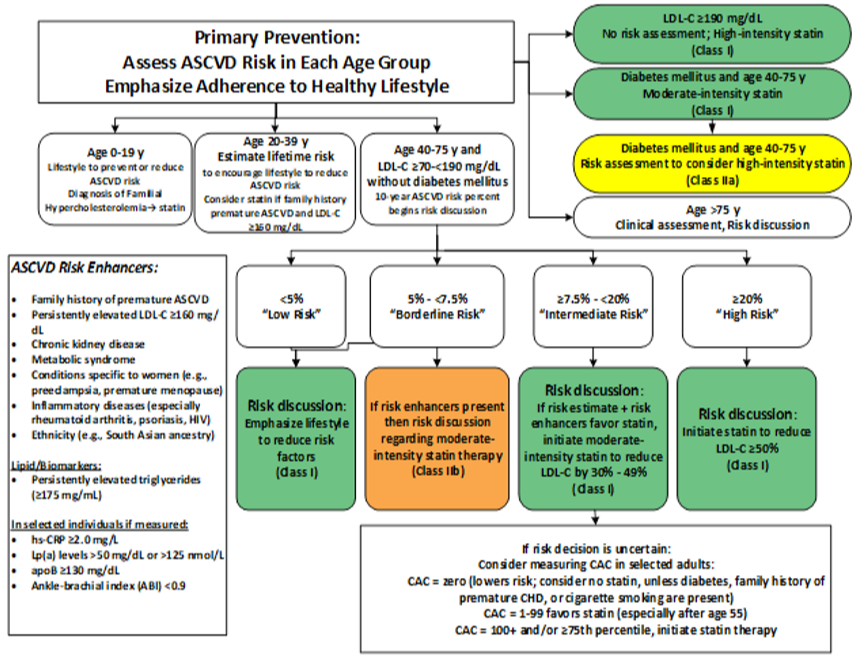
10-year risk of heart disease or stroke On the basis of your calculated risk for heart disease or stroke under 10 the USPSTF guidelines suggest you would not likely benefit from starting aspirin. The 10-year rates of cardiac death were lower after CABG or PCI than after medical therapy alone. Less than 5 low risk 5 to less than 75 borderline risk 75 to less than 20 intermediate risk Greater than or equal to 20 high risk.
On the basis of your calculated risk for heart disease or stroke less than 75 the ACCAHA guidelines suggest you have no indication to be on a. See here for more on our approach to addressing race and bias on MDCalc. The ASCVD Atherosclerotic Cardiovascular Disease 2013 Risk Calculator from AHAACC determines 10-year risk of heart disease or stroke.
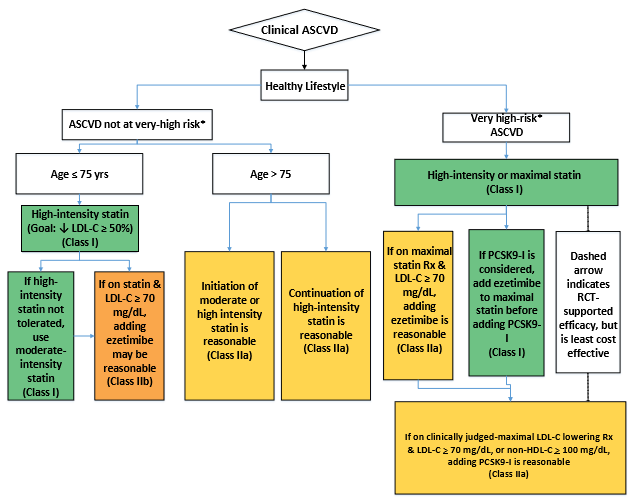
This calculator includes inputs based on race which may or may not provide better estimates so we have decided to make race optional. In adults 40 to 75 years of age without diabetes mellitus and with LDL-C levels 70 mgdL to 189 mgdL 18-49 mmolL at a 10-year ASCVD risk of 75 to 199 if a decision about statin therapy is uncertain consider measuring CAC. Medication is recommended for primary prevention in adults with an estimated 10-year risk of atherosclerotic CVD of 10 of more and an average BP of 130 mm Hg or greater systolic or 80 mm Hg or.
1 year with serum creatinine results above 975th percentile. RCRI 131 American College of Surgeons NSQIP MICA 115 American College of Surgeons NSQIP Surgical Risk Calculator 114. 2021 ACCAHASCAI Guideline for Coronary Artery Revascularization.
If you have generally it is recommended that you discuss with your doctor about starting aspirin and a statin. The use of the risk calculator to identify those in the primary prevention population who should be treated at the new lower 13080 mmHg threshold is an important advancement consistent with European risk-based treatment guidelines for hypertension and with the use of the pooled cohort risk calculator in the 2014 ACCAHA guideline for blood. Complications due to moderate or severe restricted mobility and other risk factors for VTE and not at high risk of bleeding.
The ASCVD Atherosclerotic Cardiovascular Disease 2013 Risk Calculator from AHAACC determines 10-year risk of heart disease or stroke. This peer-reviewed online calculator uses the Pooled Cohort Equations to estimate the 10-year primary risk of ASCVD atherosclerotic cardiovascular disease among patients without pre-existing cardiovascular disease who are between 40 and 79 years of age. These cardiovascular risk assessments use personal health information to calculate a 10-year and lifelong risk of heart disease.
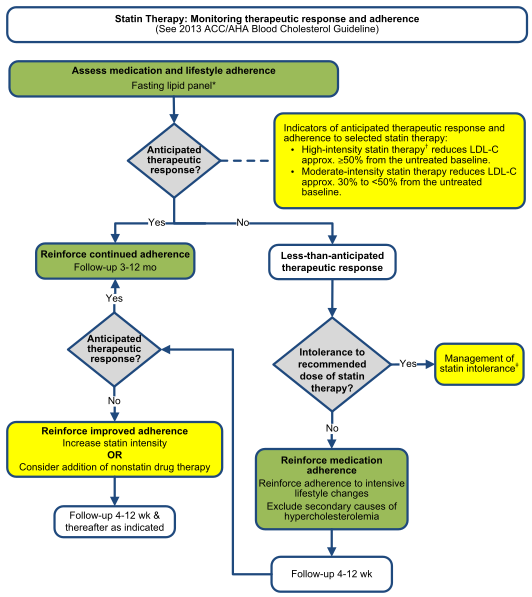
The GRACE 20 risk calculator. Risk-enhancing factors may favor statin therapy in patients at 10-year risk of 5-75 borderline risk. The risk is categorized as follows.
Coronary fatty streaks can begin to form in adolescence. 1 Patients are considered to be at elevated risk if the Pooled Cohort Equations predicted risk is. You can calculate your 10-year risk of heart disease or stroke using the Heart Risk calculator from AHA and American College of Cardiology if you are age 40.
In the article below we will focus on congestive heart failureCHF prognosis the estimates on how long can you live with congestive heart failure and the average CHF life expectancy for a given. This calculator assumes that you have not had a prior heart attack or stroke. Lower rates of cardiac death were seen after revascularization than with medical therapy alone in a meta-analysis of 25 studies enrolling.
Calcs that help predict probability of a disease Diagnosis. Initial 10-year ASCVD risk either at a first visit or a previous visit being used for comparison is calculated via the Pooled Cohort Equation published as part of the 2013 ACCAHA Guideline on the Assessment of Cardiovascular Risk. Counseling on a heart healthy lifestyle forms the foundation of ASCVD prevention.
The ACC collaborated with the American Heart Association AHA to develop this reliable heart risk calculator.
Ascvd Risk Estimator

Ascvd Risk Calculator

Pin On Health
Ascvd Risk Estimator
Cardiac Risk Calculator And Assessment

Acc Indicates American College Of Cardiology Aha American Heart Association And Ascvd Atherosclerotic Cardiovascular Disease Fnp Cardiovascular Disease
Ascvd Risk Estimator
Ascvd Risk Estimator Plus American College Of Cardiology

Ascvd Risk Calculator
Ascvd Risk Estimator

Ascvd Risk Calculator

Sunscreen Ingredients Clinical Trials Active Ingredient Geometric Mean

New Web Based 10 Year Ascvd Risk Calculator Pooled Cohort Equations Clincalc Com

Abstract 23075 Machine Learning Outperformed Acc Aha Pooled Cohort Equations Risk Calculator For Detection Of High Risk Asymptomatic Individuals And Recommending Treatment For Prevention Of Cardiovascular Events In The Multi Ethnic Study Of
Cardiac Risk Assist

Ascvd Risk Estimator

Pin On Health